Hit the road Jack
The video starts off in an empty mall parking lot where a couple of car enthusiasts are messing around with the summon feature of their Tesla. Unbeknownst to the two giving the car meaningless orders, Johnny Law sneaks up behind the vehicle with its lights of justice flashing red, white, and blue and proceeds to pull it over for running a stop sign. As the sheriff steps out and approaches the driver’s seat, he is baffled to see no one in the car and starts to question his own sanity. What if that car hit someone right then and there? Who gets the blame? The owner? The unlucky victim? Or perhaps Elon Musk?

We have officially reached the age where almost anything you can think of is now possible. Erecting sprawling skyscrapers in the Arabian Desert? Easy. Sending a car to space using a rocket? Check. Performing surgery on a grape using highly advanced robotic technology? I mean, sure why not. Chances are, if you have already thought about something, someone’s already done it. But what is stopping us from going further than that? There’s no physical barrier as to what we can and can not do. Like Eleanor Roosevelt once said: The future belongs to those who believe in the beauty of their dreams. We are currently living in the most advanced time that our civilization has ever witnessed. Everyday, more and more innovations are being unveiled worldwide. One of the many products that is soon going to hit the markets is the long awaited Autonomous Vehicle, also known as the self driving car. I for one am excited to witness such a huge turning point in the automotive industry. If you think about it, it is like the moon landing of our generation and we will be here to experience it first hand. Except this time, it will not be a one-time see it or miss it event. Instead, it will be an ongoing phenomenon. Less than a hundred years ago, cars were just a bunch of gears attached to each other that would sputter and creak as you turned the steering wheel. But now, companies are already rolling out (pun intended) state of the art models of their cars that are fully capable of driving themselves for a prolonged period of time without the need for an actual pilot.

I know, you’re probably thinking of that time when you get rear ended by some soccer mom in her SUV and you’re saying to yourself: “I already got hit by an actual living person with a brain once, it’s going to be even worse when I get hit by a car with no driver this time”.There’s actually more to it than that. This is the part where I raise you the question and ask you, my beloved readers, if autonomous vehicles have a place on our roads of today? I’m afraid that this is not one of our straightforward yes or no questions. In order to truly understand these sophisticated pieces of machinery, we must look at quite a few different things about them such as the engineering that defines them, the moral ethics (Believe it or not cars have moral standards) and consequences, and finally their overall feasibility including their safety and reliability.

Tesla Model S
The first thing that is most likely on your mind is safety. How safe are these machines? In the end, you are putting all your trust in an American company whose sole and utmost goal is to make a profit. So naturally you would be skeptical as to whether or not this car will take you from point A to B in one piece, or if it will suddenly veer off course and make you tomorrow’s national headline. According to a study published by GENERAL MOTORS, the leading vehicle manufacturer in the United States, if not the world, 94% of car crashes are caused by human error. This includes any reason like speeding, distracted driving, and just about any other stupid decision bad drivers make that you can think of which results in injuries or fatalities. If we take a look at the latest of annual statistics that are published by the vehicle company TESLA, we notice that for a total distance of around 3,000,000 miles driven by vehicles in Autopilot Mode, there has only been a single accident registered as opposed to the one crash per 479,000 miles reported by the National Highway Safety Traffic Administration for regular human operated cars.
The numbers look promising so far. We should also keep in mind that although Tesla is the biggest self driving vehicle manufacturer, it is not the only company to do so. There are some other companies that are attempting to do the same. One of the other big players is UBER who have unfortunately made national headlines in the U.S when one of their self driving vehicles struck and killed a pedestrian crossing a road. How and why did this happen? Officially, the federal safety investigators deemed that it was because the car did not know about the concept of jaywalking. Couldn’t the vehicle have done something else? Swerved into a ditch? Steer off course into oncoming traffic and potentially harm its conductor? This is where self driving vehicles get tricky. The thing about human drivers is that they have morals. Like the classic trolley dilemma. The human knows what choice to make and that depends on itself. But what about a computer? Will an autonomous vehicle kill a pedestrian or will it sacrifice its driver? This is where the morality of the self driving car comes into question.
The tricky part about morality is that it varies from person to person. You and I definitely have different standards for it. It also varies from country to country. In fact, there are many types of morality such as cultural relativism, ethical egoism, altruism, and many more that I have never heard of. So how would a computerized car handle all of this? Will it have an option to toggle which morality it will follow? Do you pre-set the car to a specific moral code before you ship it to a specific market country? The problem is that there is no universal moral code that us humans follow, and we surely won’t all agree on one in the next few years. A while back, a professor in computing and information science by the name of IYAD Rahwan set out to understand more about what people have to say about the ethics of cars. After conducting a survey, he concluded that people did want self driving cars to protect pedestrians first but they also said that they would not purchase a vehicle which was programmed to do so. This seems pretty obvious. You don’t buy a car knowing that there’s a good chance your car will kill you on purpose.. If you wanted to die, you wouldn’t buy a ticket to your own grave. That’s just absurd. You’d buy a ticket to Switzerland.
Think about it this way: I give you 100 Skittles and tell you that 3 of them are poisonous. Surely you wouldn’t eat them now. So the problem about car ethics ultimately falls into the hands of the car manufacturers. My thoughts on this are as follows: Any time humans are involved in moral dilemmas, there is always some level of subjectivity. So if a computer was in charge, it would need to be purely objective. Looking at the facts, and in most cases it would be the number of people involved to minimize damage. To me, this whole car morality thing still sounds like a logistical nightmare though. Each company will have their own programming and ethical standards in the end. Suppose the president is walking down the road and in the other lane is a van filled with five criminals. If the A.I were to be as objective as possible, it would kill the president and the criminals would live to see another day. This is just an awful compromise. You could also say the car’s morality is chosen by the programmer responsible for designing the ethical dilemmas. All that can be said is that you simply can not please everyone. The aforementioned professor also had an experiment called the Moral Machine where users would participate in ethical dilemma surveys from all around the world. This survey attracted more than a million people. Unsurprisingly, people from each continent had different choices when it came to saving the elderly or children. You simply can not please everyone and so, this is the major roadblock that is slowing the progress of autonomous vehicles being mass produced.
You’ve probably wondered about how exactly a driverless car works. Like that doesn’t really make sense at first does it? A car just driving itself? Someone needs to hold that steering wheel and press the pedal to the metal. That’s how cars have always worked. But with the new models of today, it seems that all you do is punch in an address on that interactive center console screen and the car just drives by itself. That’s insane. How is this happening? How does it even see? Astonishingly, the recent makes don’t look like they are having any problems with this so far. They are able to precisely distinguish anything from lane markings to potholes.
If you don’t want to bother reading the rest of the next paragraph about how a car sees the road ahead of it, I’ll sum it up for you: Cameras. Very smart cameras. Okay I might have exaggerated that part. It’s not only cameras but also a large number of interconnected TECHnologies such as LiDAR, radars, and ultrasonic sensors situated all around the car. Each of these components have a specific task that they are performing at all times. You may have seen a spinning component on the roof of some cars. That is called a LiDAR sensor, which some refer to as the eye of the car. This machine is sending out laser pulses that are invisible to the human eye each and every second in every direction in order to create an image of its surroundings. The laser pulses bounce back and then calculations are made from within the computer in order to identify the position of the car in its environment and how far away it is from other vehicles or obstacles. A majority of autonomous car manufacturers are using LiDAR however, millionaire tech mogul and CEO of Tesla Elon Musk has a profound hatred for it and in result, does not use this form of technology on his Tesla models. His exact words were: “LIDAR is a fool’s errand. Anyone relying on LIDAR is doomed. Doomed!” Why did he say this? Mainly because they are costly to assemble and install. This makes sense because Elon is committed to making his revolutionary electric cars available to everyone. He also claims that LiDAR is heavily reduced in its capabilities in severe weather. In addition, he does not want to focus all this effort on one single part of the car. If the LiDAR suddenly malfunctions, the self driving car would be dead. He wants a sort of backup, kind of like diversifying your investments: Don’t put all your money in one place. So what does Tesla do instead? They use eight exterior cameras and twelve ultrasonic sensors installed throughout the vehicle.

Which brings me to my next point: ultrasonic sensors. These allow for the smart car to detect passing vehicles and also potential collisions. In the event of a potential collision, the car will swerve away in the safest direction to avoid being hit. Some cars even raise their suspension when they detect an unavoidable collision in order to protect their passengers.
RADARs (Radio Detection And Ranging) that are typically installed at the front of the car are used in situations such as heavy fog. A radar works by sending a radio wave in one direction and waiting a certain amount of time in order for said wave to intercept an object and bounce back to the point of origin. So in cases such as snowstorms or heavy fogs where the driver will not be able to see what is going on in front of it, the car will constantly monitor for objects ahead. This allows for the car to activate its collision warning system and alert the driver of an oncoming obstacle or even commence automatically breaking. The small downside of radar is that the object that it is trying to detect must be large enough for that signal to bounce back such as a car. This means that pedestrians and cyclists are usually not detected.
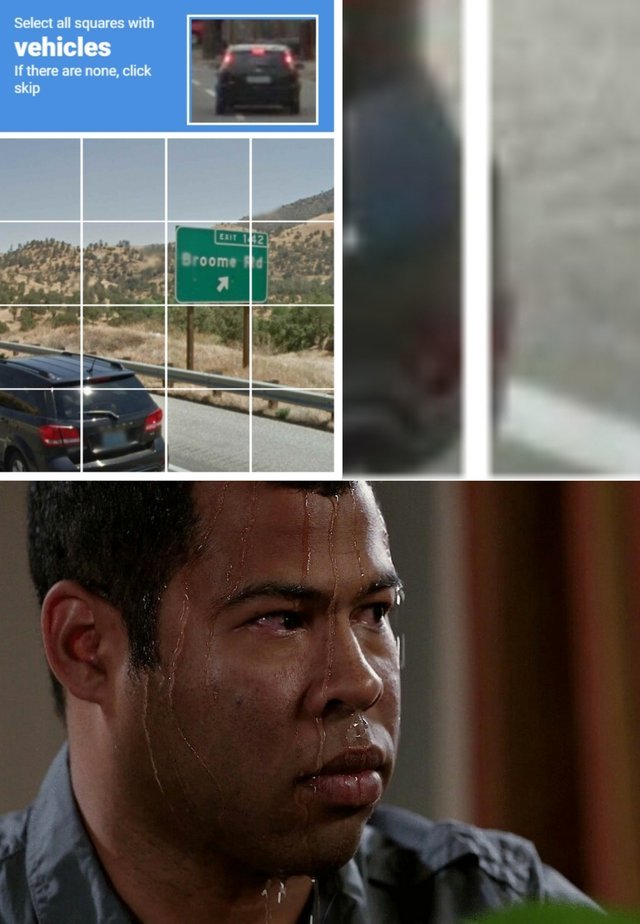
Machine learning is also used to further develop Artificial Intelligence software. This helps the camera software learn new things. Have you ever been asked by a website to click on all the traffic lights or stop signs? You are basically helping the companies who put those ads out by showing their A.I what a stop sign looks like from different angles and whatnot.
All vehicle manufacturers know about these devices, programs and how they function. The fight between companies is figuring out how to make these technologies respond faster and produce them for cheaper.
Up to this day, there has only been a very small number of autopilot involved accidents. Before being released to the market, cars are tested for long periods of time on closed simulated tracks. A majority of car companies are based out of the West Coast, mainly California. The Golden State is known for being a dry place and in result cars are tested in mostly perfect conditions. I doubt that they expérience heavy environments such as snowstorms. That makes these cars not so suitable for some cold parts of the world. Also, these circuits are designed with stop signs, traffic lights, and all infrastructure present. The manufacturers have done almost little or no planning for regions where road infrastructure is not as developed in the United States. These cars could not be sold for regions such as the Middle East where lane markings and signage are practically nonexistent. The manufacturers have a long way to go before being able to fully make these cars available to the world.
From pedal bicycles to super cars breaking the sound barrier. There’s no denying it, the automotive industry has just skyrocketed in the past few years. Although autonomous vehicles sound like a wonderful idea with their sophisticated engineering and user safety, there appears to be quite a few more things we need to figure out such as trusting customers to use them appropriately and coming to a fair conclusion in regards to the vehicle’s moral codes before being able to answer whether or not they truly deserve a place on our roads.
Sources to be added soon
 Dan The Man's corner